Multimodal AI Video Is Getting Scarily Good. UK Lawyers Should Be Paying Attention.

A year ago, AI-generated video was a novelty. Now, ByteDance's SEED research team has released Seedance 2.0, a multimodal video generation model that accepts text, images, audio, and video as combined inputs. For UK lawyers, this is potentially a rapidly escalating evidential crisis.
ByteDance's SEED research team recently released Seedance 2.0, a video generation model that accepts text, images, audio and video as combined inputs. The company claims substantial improvements in prompt adherence, motion stability, character consistency and synchronised audio-video output. I have not tested it myself, and vendor claims should always be treated with appropriate scepticism. But the trajectory is clear, and it is not unique to ByteDance. OpenAI's Sora, Google's Veo, Runway, Pika, Kling: the field is crowded and moving quickly. Each generation narrows the gap between synthetic and real.
For UK lawyers, this touches evidence, intellectual property, regulatory compliance and client advisory work right now.
The Evidence Problem Just Got Harder
Consider a family law case where one party produces video footage of the other behaving badly. Or a personal injury claim supported by dashcam footage. Or a fraud prosecution relying on CCTV.
Until recently, the forensic question was whether footage had been tampered with. Edited. Spliced. Altered. Courts and experts had decades of experience with that kind of manipulation (or often, the lack of it).
Multimodal AI video generation poses a different problem. The footage need not be altered. It can be fabricated from scratch. Feed a model a photograph of someone's face, a text description of the scenario you want, and an audio clip of their voice. The output is a video that never happened.
The Civil Procedure Rules require parties to verify the authenticity of evidence, and the Criminal Procedure Rules impose disclosure obligations that assume a baseline ability to distinguish real from fake. Neither framework was designed for a world where convincing synthetic video can be produced on a laptop in minutes.
Expert evidence on video authenticity will become more common, more expensive, and more contested. Forensic analysts will need to stay ahead of detection techniques, which is a losing race when the generation models improve faster than the detection tools. The C2PA content provenance standard offers some hope for verifiable metadata, but adoption remains patchy and metadata can be stripped.
Judges will need education. So will solicitors and barristers who are not yet thinking about this. If you are conducting any litigation involving video or audio evidence, you should already be considering the possibility that it is synthetic.
Deepfakes and the Online Safety Act 2023
The Online Safety Act 2023 imposes duties on platforms to address illegal content and content harmful to adults. Deepfake intimate imagery is now a priority offence under the Act, following amendments that criminalised the sharing of intimate deepfakes without consent.
Multimodal video generation makes producing such content trivially easy. A photograph and a text prompt are enough. The barrier to creation has effectively been removed.
Ofcom's codes of practice under the Act require platforms to take proactive steps to identify and remove this material. But the sheer volume and quality of synthetic content will test those systems severely. Platforms integrating generation tools directly (and ByteDance, as TikTok's parent company, has obvious incentive to do so) face a tension between enabling creative features and policing their misuse.
For lawyers advising clients who operate platforms, or clients who are victims of deepfake abuse, the practical question is sharpening. What constitutes reasonable steps under the Act? How quickly must content be removed? What liability attaches when a platform's own AI tools were used to create the harmful content?
These questions are not hypothetical. They are arriving in inboxes now.
Intellectual Property: Training Data and Output
Every multimodal AI model is trained on vast datasets. For video models, that means films, television, user-generated content, stock footage, music, voice recordings. The intellectual property implications are enormous and largely unresolved.
In the UK, the Copyright, Designs and Patents Act 1988 provides no specific exception for AI training on copyrighted works (the proposed text and data mining exception was shelved in 2023 after fierce opposition from creative industries). Any model trained on copyrighted material without licence is potentially infringing. The fact that the training happened outside the UK does not necessarily resolve the issue if the output is distributed here.
On the output side, the position is equally uncertain. Section 9(3) of the 1988 Act provides that the author of a computer-generated work is "the person by whom the arrangements necessary for the creation of the work are made." Whether that applies to AI-generated video, and who the relevant "person" is, remains untested in the courts.
For lawyers advising content creators, media companies, or businesses using AI-generated video in marketing or communications, the risk is real. Using synthetic video commercially without understanding the provenance of the model's training data is a liability waiting to crystallise.
The Regulatory Picture
The UK has no equivalent of the EU AI Act, though the government's pro-innovation approach (outlined in the March 2023 White Paper and subsequent consultations) delegates regulatory responsibility to existing sector regulators. Ofcom, the FCA, the ICO and others are expected to apply AI-specific guidance within their existing mandates.
For video generation specifically, the most relevant regulators are Ofcom (for platform obligations), the ICO (where personal data or biometric information is used to generate synthetic content), and potentially the Equality and Human Rights Commission (where synthetic media is used to harass or discriminate).
The Bletchley Declaration and subsequent AI Safety Summits have flagged synthetic media as a priority concern, but binding regulation remains thin. The UK's approach relies heavily on voluntary commitments from AI companies and the agility of existing regulators. Whether that is sufficient for a technology evolving this quickly is a fair question.
Lawyers advising regulated entities should not wait for prescriptive rules. The regulatory direction is clear even if the detail is not. Building internal policies on synthetic media use, detection and disclosure now is sensible risk management.
What to Do Monday Morning
If you are a litigator: start thinking about authentication protocols for video and audio evidence. Discuss with instructing solicitors or counsel (as the case may be) whether any footage in current cases could be synthetic. Identify forensic experts who specialise in AI-generated media detection.
If you advise platforms or media companies: review your client's position under the Online Safety Act. Assess whether their content moderation systems can detect AI-generated material. If they are integrating generative AI features, ensure the compliance framework accounts for misuse.
If you advise on IP: audit any use of AI-generated video content in your client's business. Understand what model was used and, where possible, what it was trained on. Flag the risk clearly.
If you are a firm leader: consider training. Most lawyers have a vague awareness that deepfakes exist. Few understand how easy they are to produce, how good they have become, or what the legal implications are. That knowledge gap is a professional risk.
The Trajectory Matters More Than Any Single Model
I am deliberately not reviewing ByteDance's specific product. I have not used it and cannot vouch for its claims (although the anecdotal feedback suggests it is impressive, if a bit of a learning curve). What matters is not whether this particular model lives up to its marketing, but that the capability it represents is real, improving rapidly, and available to anyone with an internet connection.
Six months from now, there will be another model. Better. Faster. Cheaper. The direction is set. The question for UK lawyers is whether they are preparing for the legal consequences of that trajectory, or waiting until a case forces them to.
Waiting is not a strategy. It is how professionals get caught out.
Sources
Stay ahead of the curve
Get practical AI insights for lawyers delivered to your inbox. No spam, no fluff, just the developments that matter.
Chris Jeyes
Barrister & Leading Junior
Founder of Lextrapolate. 20+ years at the Bar. Legal 500 Leading Junior. Helping lawyers and legal businesses use AI effectively and safely.
Get in TouchMore from Lextrapolate
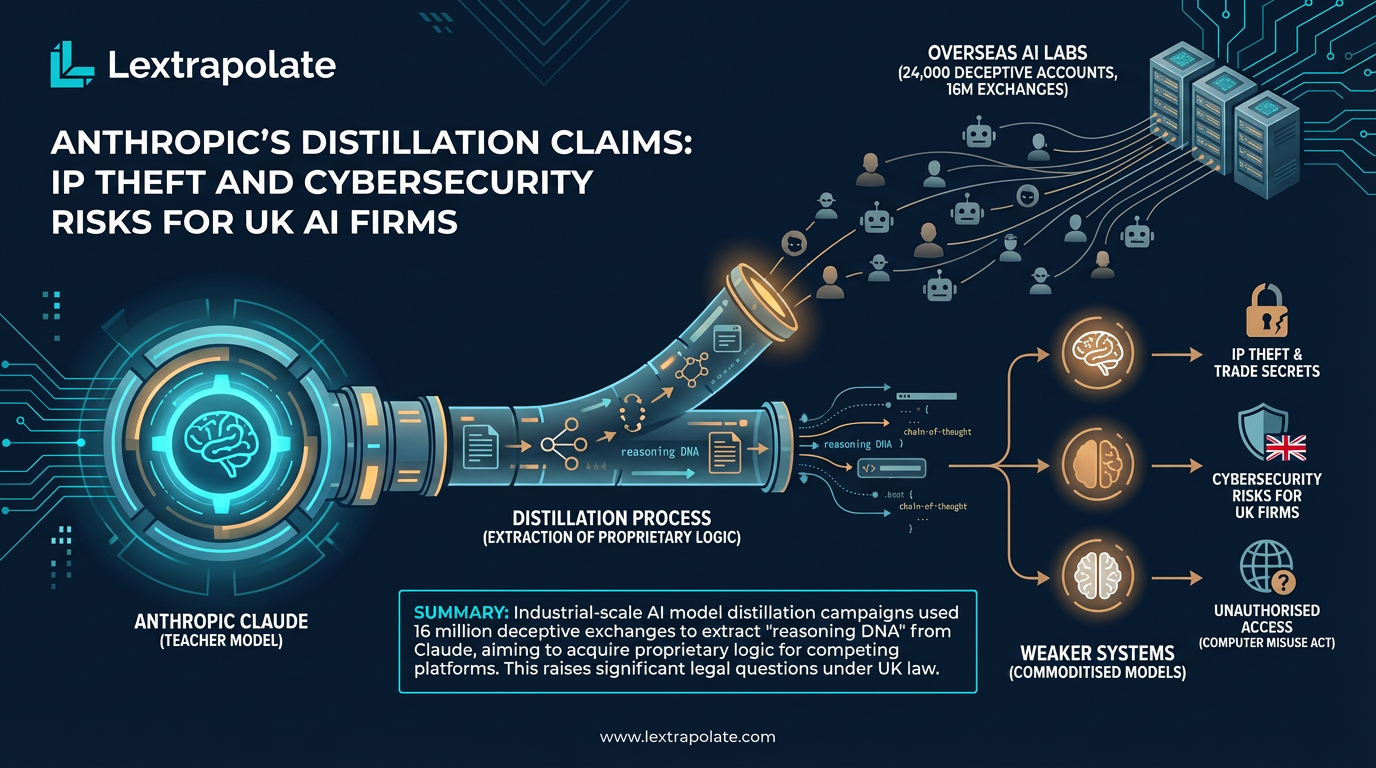
Anthropic's Distillation Claims: IP Theft and Cybersecurity Risks for UK AI Firms
Anthropic identified industrial-scale theft of Claude's capabilities via 16 million fake queries. Here's what it means for UK firms building on proprietary AI.
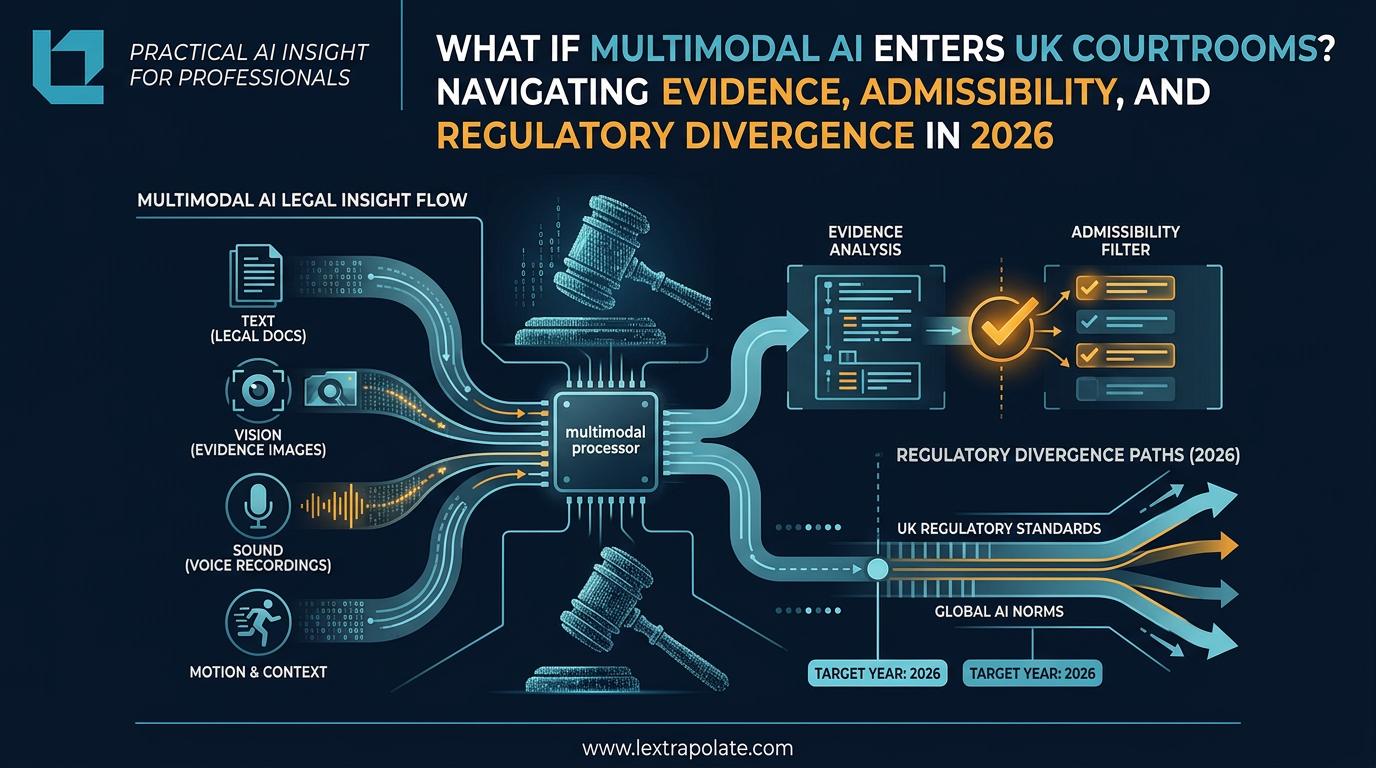
What If Multimodal AI Enters UK Courtrooms? Navigating Evidence, Admissibility, and Regulatory Divergence in 2026
Multimodal AI can see, hear and reason across modalities. UK courts are not ready. Here is what lawyers need to understand before this lands on their desk.
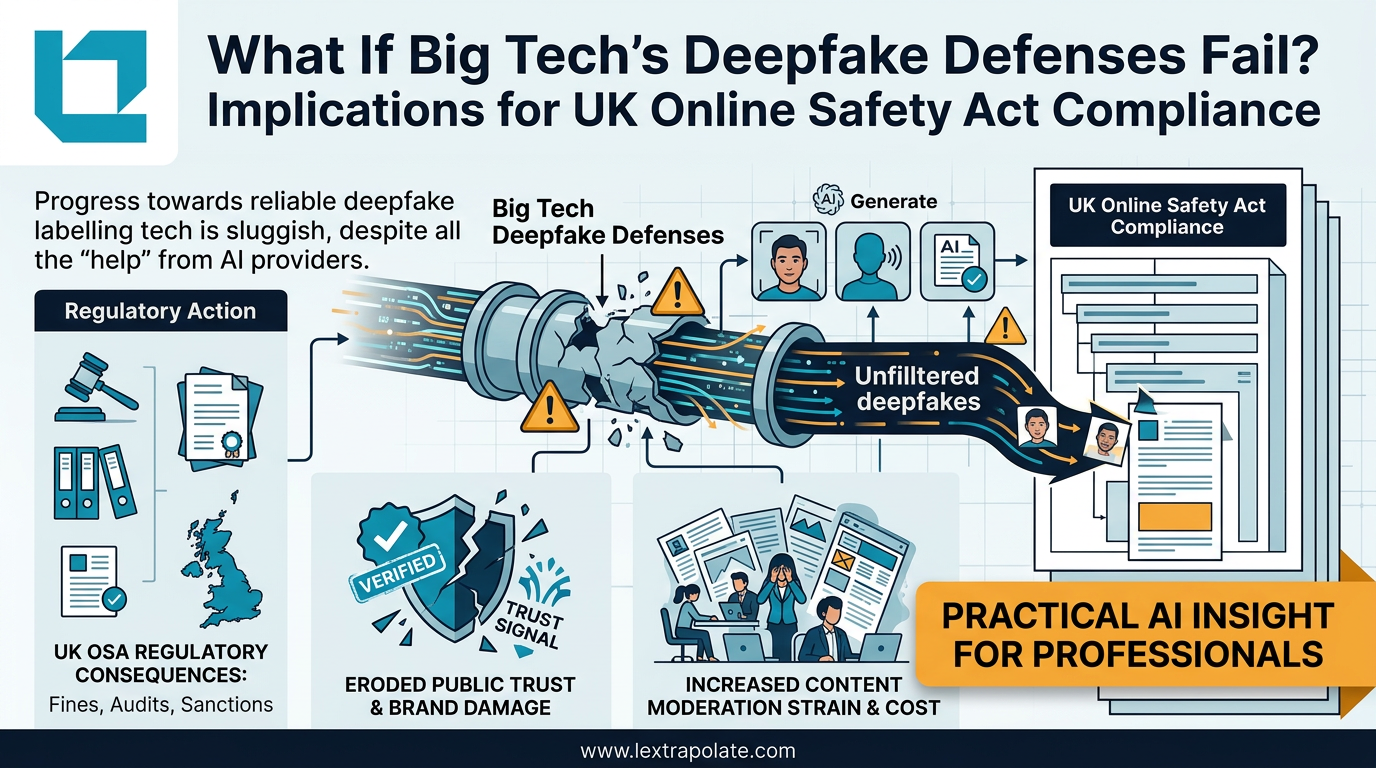
What If Big Tech's Deepfake Defences Fail? Implications for UK Online Safety Act Compliance
Detection tech is losing the arms race against deepfake generators. UK lawyers need technical literacy now, not when the first case lands.