If AI Agents Become Your Workforce, What Happens to the Law Firm?
Imagine a single lawyer handling the workload of a ten-person team. Not by working longer hours. By deploying AI agents that draft, research, review, and chase in parallel, around the clock, without billing targets or holiday requests.
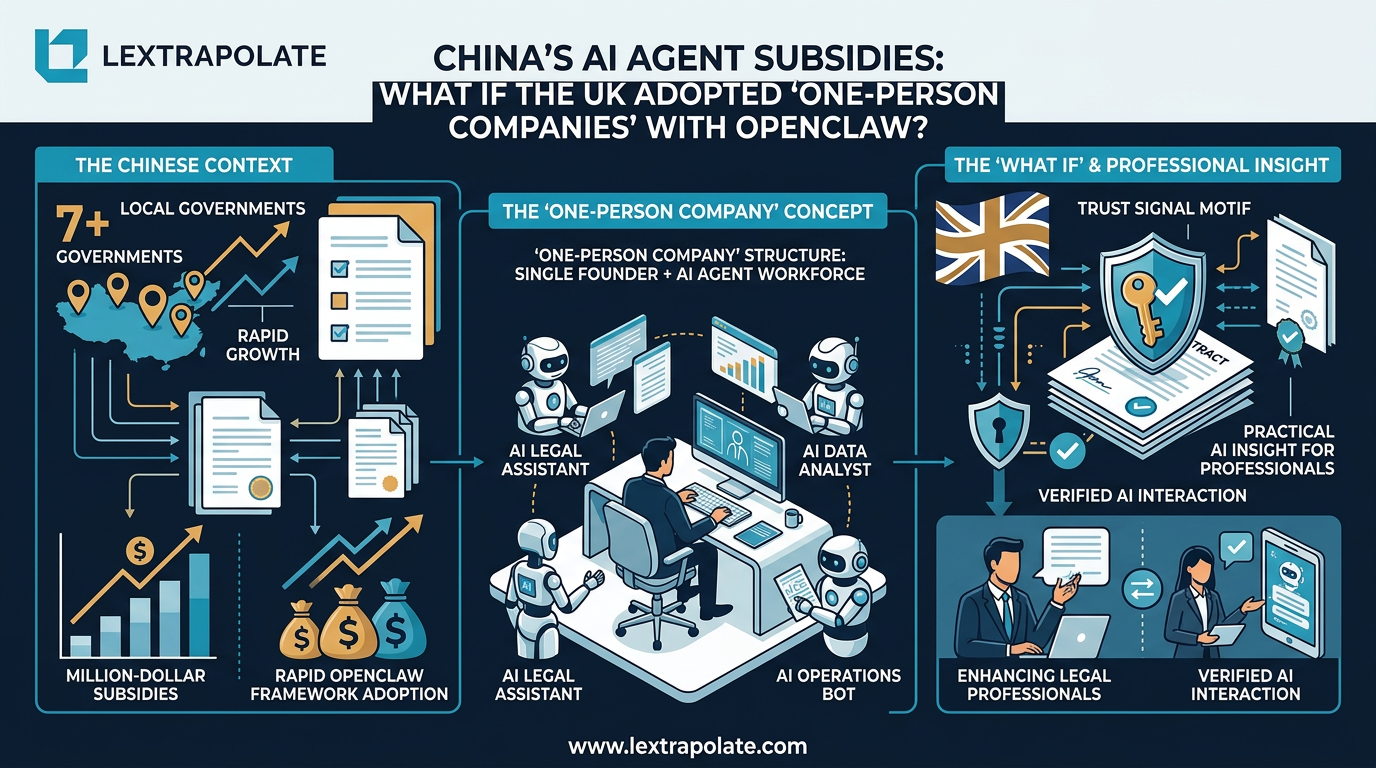
That scenario is not science fiction. It is the explicit ambition behind a wave of government-backed programmes in China that have been making headlines in early 2026. Across at least seven Chinese cities, including Shenzhen's Longgang district, Hefei, and Nanjing, local authorities have begun offering subsidies of up to $1.4 million to founders building what they are calling "one-person companies": businesses where a single human runs operations supported entirely by AI agents acting as the workforce.
The framework attracting most attention is OpenClaw, an open-source multi-agent system that has been adopted by Chinese tech giants including Tencent, Alibaba, and ByteDance. The concept is straightforward: one founder orchestrates a network of specialised AI agents, each handling a defined function. Together, they execute what previously required a team.
The specific subsidies, the security concerns flagged by Chinese authorities, the bans on state-run enterprise adoption: those details belong to a story that is still developing and is not fully verified. But the underlying proposition is real enough to take seriously. And for the legal profession, it raises a question that cannot be deferred indefinitely.
If AI agents genuinely become a scalable substitute for human workforce, what happens to the law firm's business model?
The Leverage Model Has Always Been the Product
Traditional law firm economics rest on leverage. A senior partner generates revenue by directing the work of more junior fee-earners. The pyramid captures margin at the top. The associate pipeline exists to make that possible.
This is not simply a structural curiosity. It drives almost every major decision in a firm: how many trainees to recruit, how to price matters, whether to promote, what work to take on, and how to build practice groups. The leverage ratio is the engine.
AI agents do not fit anywhere in that model. They are not trainees. They do not bill time. They do not require supervision in the way a junior lawyer does, and they do not develop into senior lawyers who then anchor their own pyramids. If a single experienced lawyer can instruct a network of agents to handle document review, due diligence, contract drafting, regulatory research, and client correspondence simultaneously, the pyramid does not get flatter. It disappears.
The Chinese "one-person company" framing is useful precisely because it makes the implication explicit. The question is not whether AI will improve efficiency within the existing model. It is whether the existing model survives at all once the efficiency gains are sufficient.
What a Solo Practitioner Could Actually Do With This
Set the policy context aside and think about the practical capability question. A sole practitioner today is constrained by time and concentration. There are only so many matters a single lawyer can actively run. That constraint has always limited the competitive ceiling for solo practice.
AI agents dissolve that constraint, at least partially. A lawyer who can deploy agents to handle first-pass document review, draft standard-form agreements, monitor regulatory developments, and manage routine client communications is no longer limited by what one person can do in a day. They are limited by what one person can orchestrate, quality-check, and take professional responsibility for. That is a different and much higher ceiling.
For the right kind of practice, the competitive implications are significant. Commercial contracts, regulatory compliance work, straightforward dispute management: these are areas where a technically sophisticated solo practitioner, properly equipped, could genuinely compete with a mid-sized team on throughput, while undercutting on price and moving faster on turnaround.
This is not hypothetical in the abstract. The tools to begin building this kind of practice exist now. The question for any lawyer thinking about firm strategy is whether they are experimenting with those tools or waiting to see what happens.
The Regulatory and Professional Conduct Dimension
Before anyone builds their agent-powered practice, there are genuine constraints that require serious attention.
Professional conduct rules in England and Wales do not currently contemplate AI agents as part of a lawyer's workforce. The SRA's Standards and Regulations place obligations on the individual lawyer and on the firm. Supervision requirements under the Code of Conduct apply to the work product going to clients, regardless of how it was generated. A lawyer who delegates substantively to AI agents and fails to supervise the output adequately is exposed in exactly the same way as one who fails to supervise a junior colleague.
The Ayinde case illustrates what happens when AI output is not checked. That risk does not diminish as the tools improve. It changes shape.
Data protection creates a separate layer of concern. Any framework processing client data must comply with UK GDPR. Where AI agents are built on cloud infrastructure with cross-border data flows, the data protection analysis becomes complex quickly. The security concerns flagged in relation to OpenClaw specifically, including reported vulnerabilities in early versions of the framework, are a reminder that open-source tools require due diligence before deployment in any professional context handling sensitive information. The ICO's guidance on AI and data protection is worth reading carefully before building any agent-based workflow that touches client data.
The regulatory framework has not kept pace with the technology. That creates both risk and, frankly, opportunity for lawyers who take the time to understand it properly.
Practical Takeaways for This Week
None of this requires waiting for the regulatory position to crystallise. There are things a lawyer or firm can do now.
Map your current workflow. Before automating anything, identify the tasks that consume the most time per matter and carry the lowest judgement threshold. Document review, precedent adaptation, regulatory searches, and status chasing are the obvious candidates. Those are the tasks where agents deliver the most direct productivity gain with the least professional risk.
Run a contained experiment. Pick a low-stakes non-confidential internal project and use an AI agent framework to complete it. You do not need OpenClaw or a Chinese subsidy to do this. Other tools like Anthropic's Claude CoWork can replicate multi-agent orchestration in a controlled environment. The point is to develop your own understanding of what agents can and cannot do reliably.
Review your supervision processes. If AI-generated work product is leaving your practice in any form, you need a documented review step. Not because it is legally required yet, but because it will be, and because the professional conduct risk exists now regardless of whether the rules have caught up.
Think about what the leverage model means for your firm specifically. If you are a senior partner, the question is whether you are building a practice that will be viable when junior lawyer economics shift. If you are a junior lawyer, the question is whether you are developing the skills that will matter when the volume work you currently do is automated.
The Question Worth Taking Seriously
The "one-person company" idea, whether or not it proves viable in Chinese tech policy, names something real. The constraint that has always defined the ceiling of solo practice is the number of things one person can do at once. AI agents raise that ceiling materially.
The law firm pyramid was not designed as the only possible structure for legal services. It was the rational response to a world where scaling output required scaling headcount. If that relationship breaks down, the pyramid breaks with it.
That does not mean firms disappear. It means the ones that thrive will be structured around something other than leverage. What that looks like is still being worked out, and the profession would do well to be part of working it out rather than observing from a distance.
Sources
- 1China pushes OpenClaw "one-person companies" with millions in AI agent subsidies
- 2Chinese tech hubs promote OpenClaw AI agent, despite security concerns
- 3Shenzhen Longgang Backs OpenClaw with Millions in Subsidies for One-Person AI Companies
- 4OpenClaw AI agent craze sweeps China as authorities seek to clamp down amid security fears
- 5China is Rushing to Adopt OpenClaw Agents. Here's Why.
Stay ahead of the curve
Get practical AI insights for lawyers delivered to your inbox. No spam, no fluff, just the developments that matter.
Chris Jeyes
Barrister & Leading Junior
Founder of Lextrapolate. 20+ years at the Bar. Legal 500 Leading Junior. Helping lawyers and legal businesses use AI effectively and safely.
Get in TouchMore from Lextrapolate
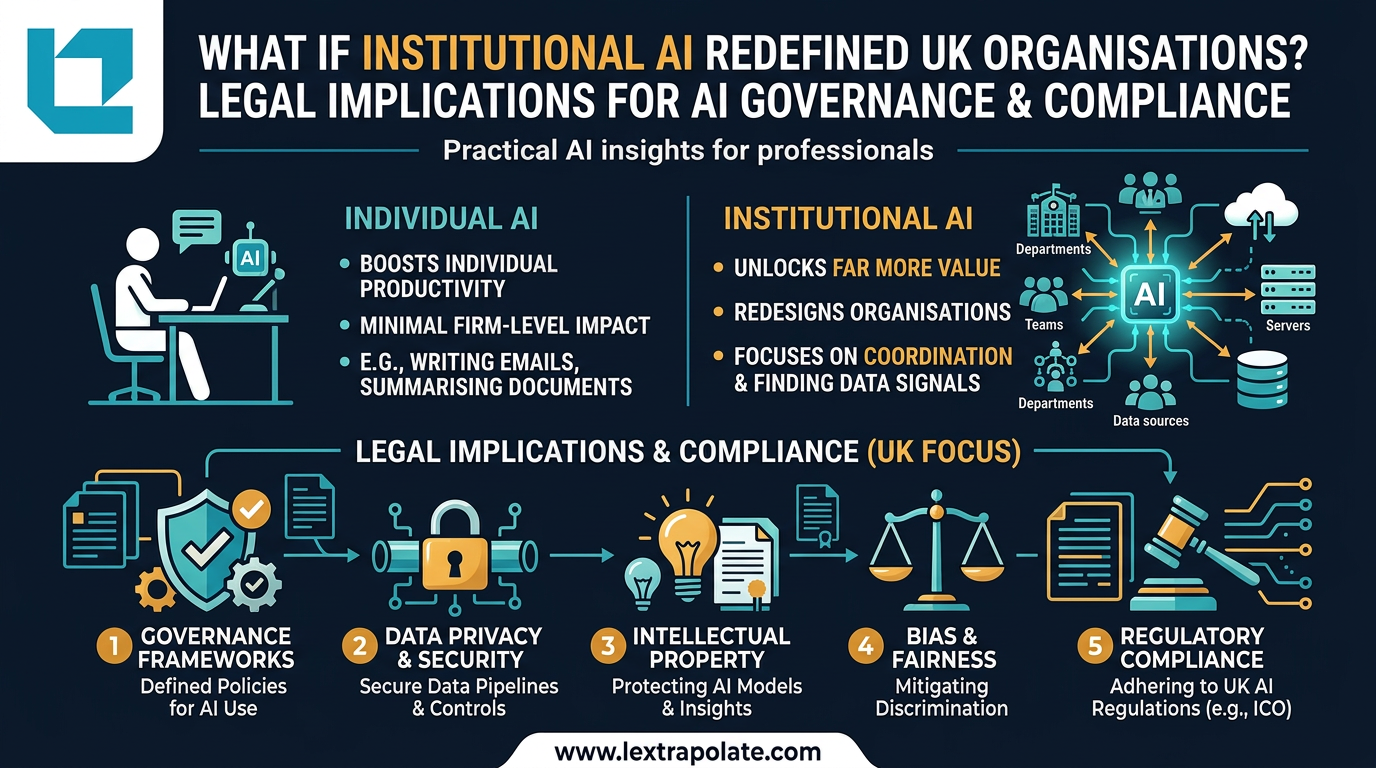
Your AI Is Working Hard. Your Firm Is Not: The Case for Institutional AI in Law
Individual AI makes lawyers faster. Institutional AI could remake law firms entirely. Most firms are pursuing the former and missing the latter.
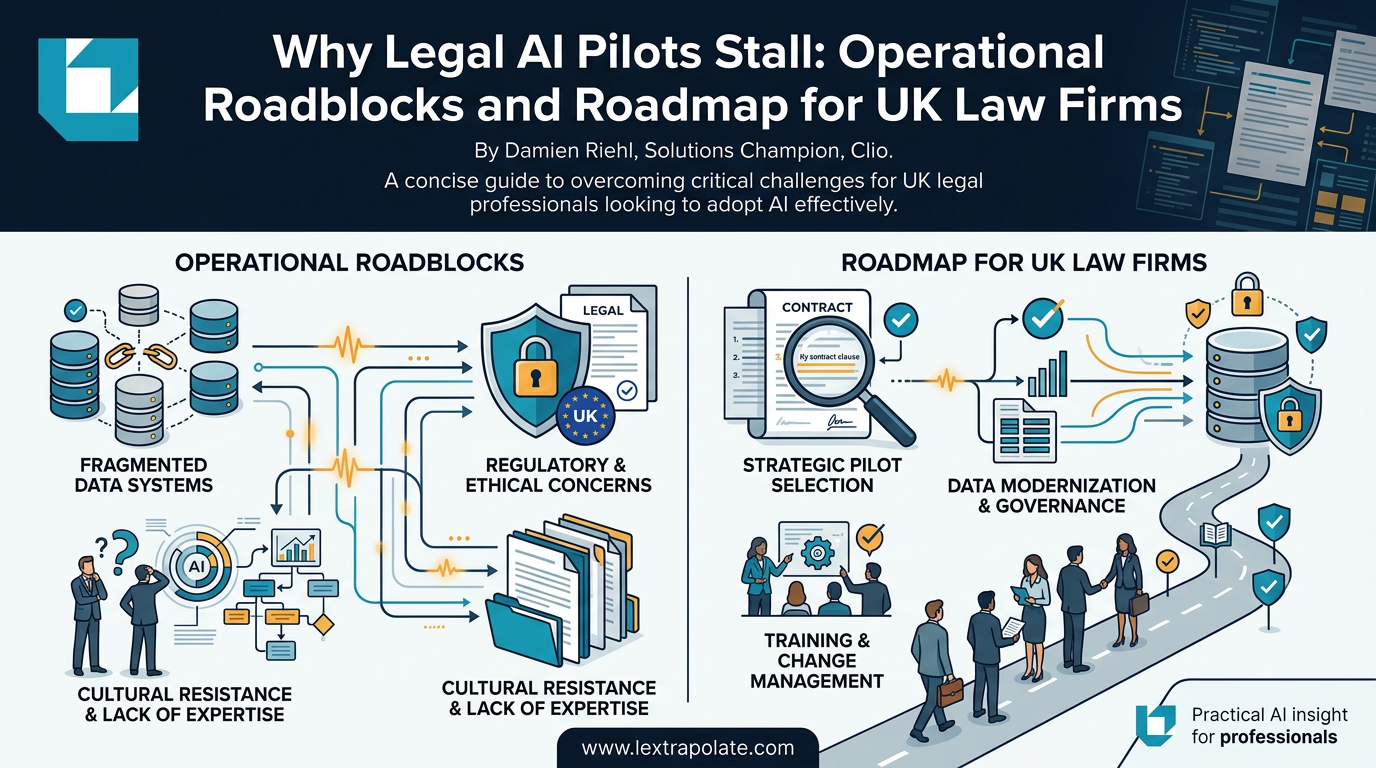
What If Your Firm Never Escapes Pilot Purgatory? The AI Adoption Trap Most Law Firms Are Already In
Most legal AI pilots succeed technically and fail operationally. Here is why firms stall after the demo, and what it actually takes to move forward.
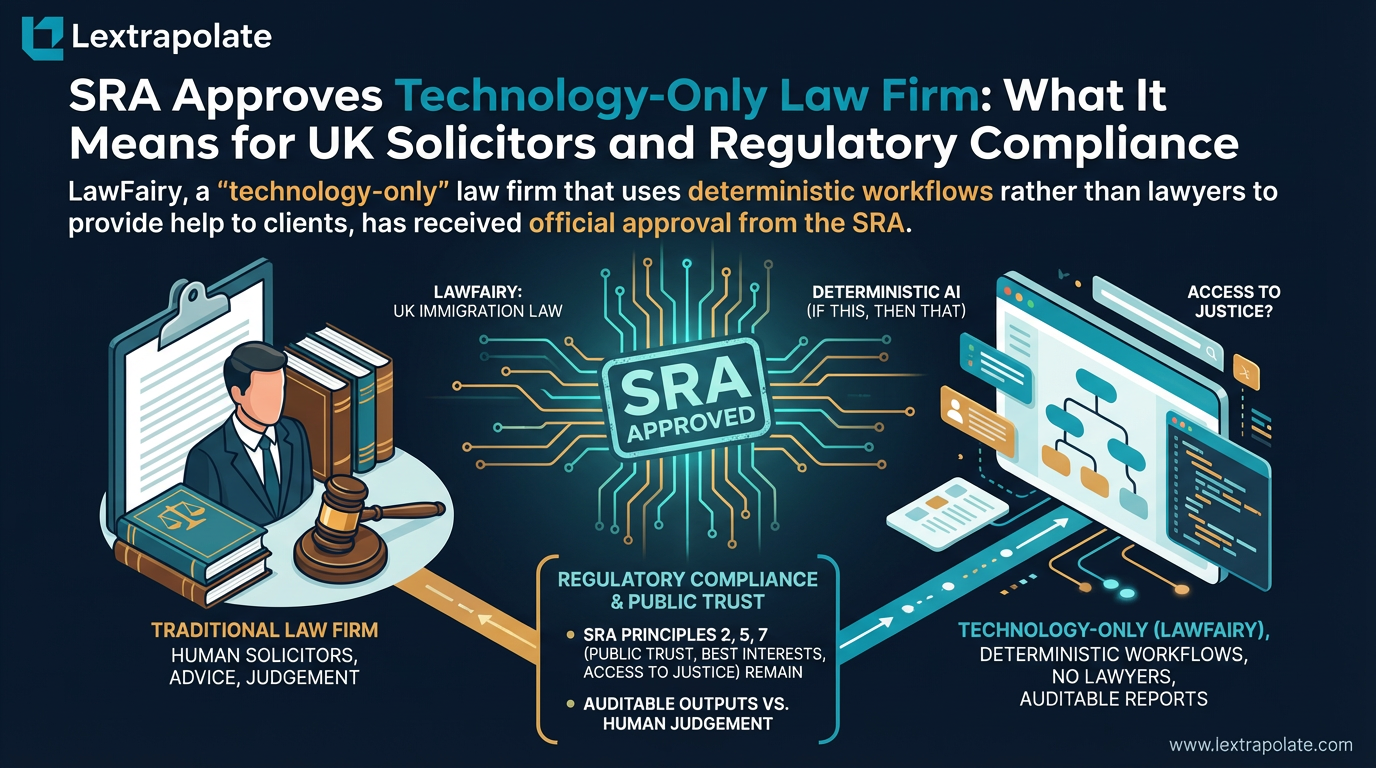
The Lawyerless Law Firm: What SRA Approval of Technology-Only Practices Means in Practice
The SRA has now authorised two technology-only law firms. No solicitors, no advice, just automated workflows. That deserves serious scrutiny.